Showing posts with label Cowgirl Creamery. Show all posts

Wednesday, September 24, 2008

Make more friends, serve more cheese


Help! I need to impress my friends and look like I know something about cheese! What should I put on a cheese plate?


Not to worry, my dear. Putting out a good cheese plate is easy. Let me be of service and help demystify at trip to the cheese counter, or (heaven forbid) a trip to the specialty cheese case in the grocery store.


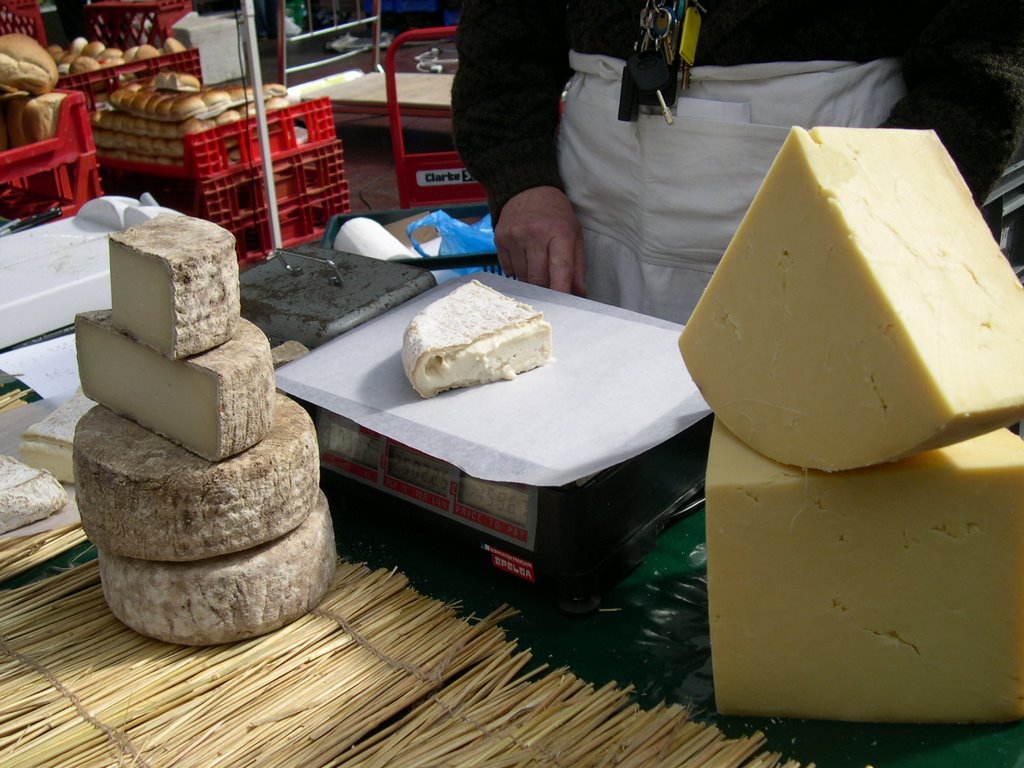
First, shop around. Every cheese counter and grocery store will have a different selection of cheese. Some will be better than others. Locally owned stores might have a few more locally produced products. I always start looking there. Don't be shy about asking for help. See if the person in charge of the cheese counter is available. I love asking for help. I want to know what's in peak form today. If everything is in shrink wrap, I want to see what's freshly cut. Cheese is a living food! It begins to break down and lose flavor the moment it is cut. If it has been enveloped in plastic for a month, even breathable plastic, it won't be very tasty. When I prepare to serve a cheese, I like to take a knife or a cheese plane and scrape the cut surface of the cheese. This takes away the dead, plastic-y taste and gives you a fresh surface to enjoy.


See if the store will cut you a fresh piece of cheese. Or see it they’ll open a package so you can taste the cheese. Rainbow Grocery in San Francisco is happy to let you try before you buy. That way you'll know how a cheese tastes. If you buy an artisan cheese regularly, you might begin to taste the seasonal variations. There is a huge difference between Cowgirl Creamery's Mt. Tam made in the winter and a Mt. Tam produced in the summer. Eat more cheese and see for yourself!


How much to serve? It depends. Is this an appetizer course? Are other dishes being served? I figure an ounce of each cheese per person. Two ounces if it is the only thing being served.


Always serve aged cheeses at room temperature and each cheese should have its own knife or cheese plane.


When selecting cheeses for a party, I usually go for three or four cheeses. As a general rule of thumb, vary the milks and mix up the texures. Sometimes I'll go with a theme, like all cow's milk cheeses, or cheeses from Spain. But my favorite plate usually consists of a cow's milk cheese, a goat's milk cheese, and a sheep's milk cheese. If I'm feeling sporty, the fourth cheese will be either be a cheddar or a blue cheese.


For example, I might take a piece of Garrotxa, a Spanish goat cheese with a semi-soft, slightly chewy texture, match it with a buttery, French Triple Crème like Brillat-Savarin, and pick a sheep's milk cheese like Pecorino Foglie di Noce with walnut overtones. If I want to have the slam dunk crowd pleaser, I'd throw in a piece of Montgomery's Cheddar from Somerset, England. With this, I'd serve a full flavored honey; my favorite being a locally produced blackberry honey. A great cherry jam would work wonders, as well as some dried apricots and cranberries. Apple slices would be nice, too. I would serve everything with thin slices of a crusty, sweet, baguette and I'd call it complete.


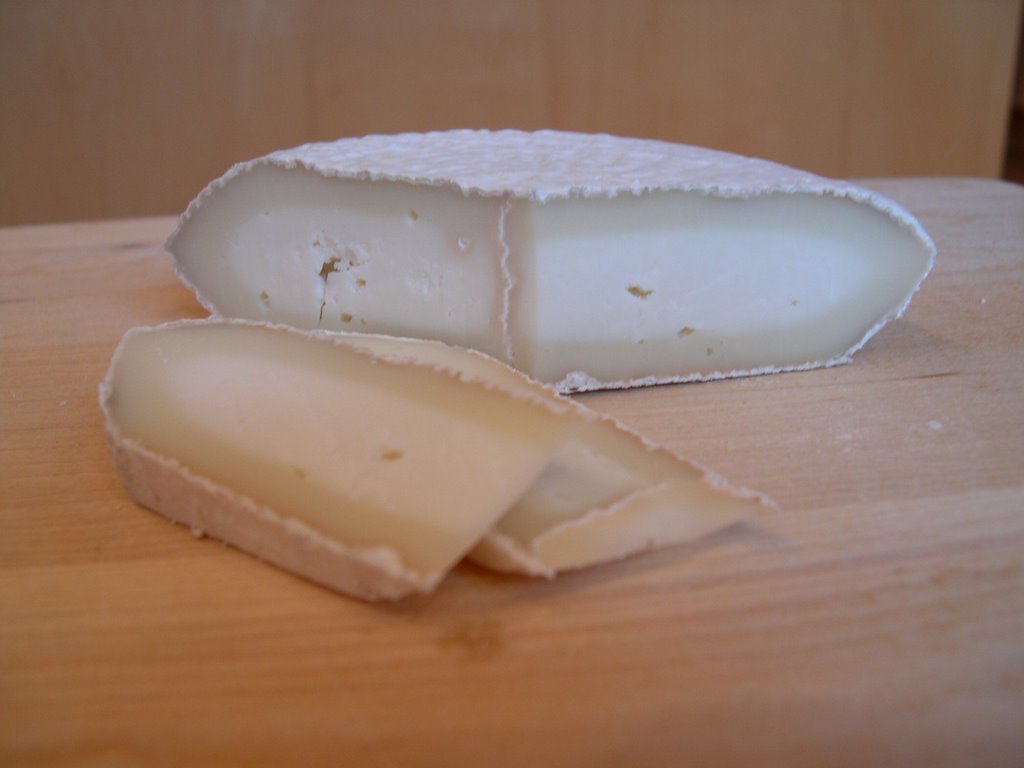
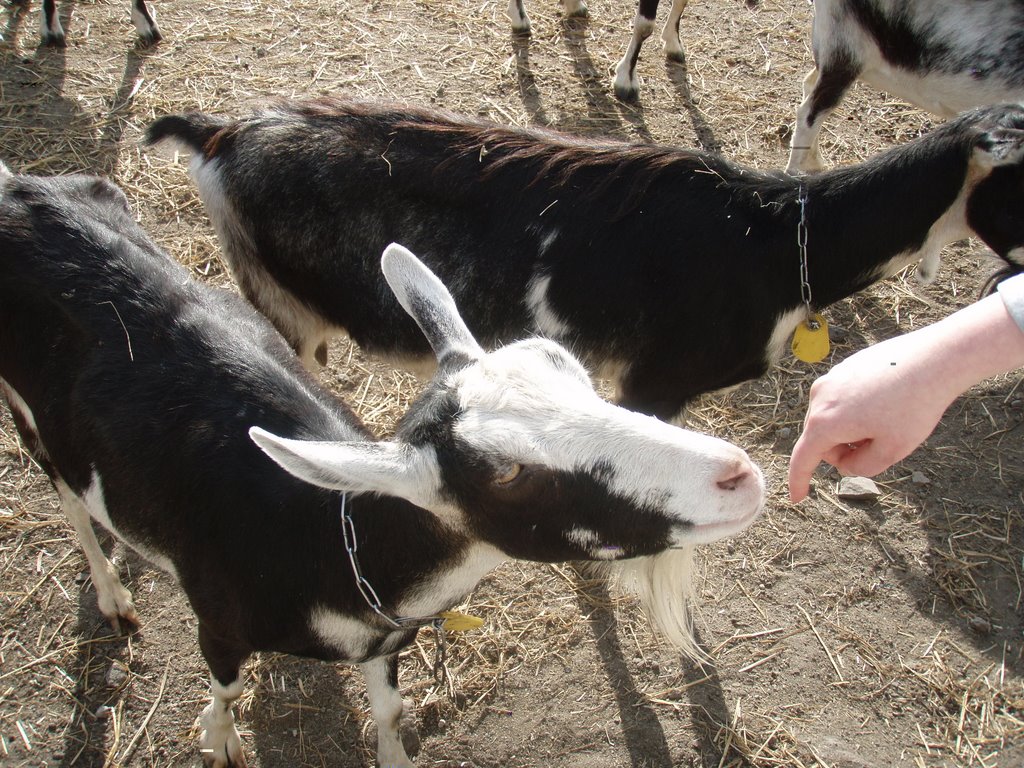
Photo: Ticklemore Goat, aging to perfection
.


Other suggestions: A cheese plate of the British Isles, a.k.a. the Neal's Yard Dairy cheese plate. Cow's milk: Trethowan's Gorwydd Caerphilly, from Wales. Bright lemony flavors and beautiful layers as it ages. Goat's milk: Ticklemore Goat. Why? Because I worked there! And the semi-soft texture with the slightly salty, mushroomy bloomy rind is sublime. For a sheep's milk cheese, go for Berkswell. It can have toasted nutty notes with hints of pineapple. Then grab a piece of Harbourne Blue, a goat's milk blue and you've got a party.


Photo: Sierra Mountain Tomme from La Clarine Farm, Somerset, CA.


How about Spain? Go for Mahón (cow), Ibores (goat), Zamorano (sheep), and Valdeon (blue). I like Spanish cheeses, so here's another one for you, all goat: Nevat (semi-soft, bloomy rind with a light, creamy, and tangy), Pata Cabra (washed rind with a chewy open texture, can have green apple, fruity overtones), and Pau Sant Mateu (wash rind with a smooth paste that can be slightly strong and full flavored.)


American Artisan Plate sampler to die for: Mt. Tam (cow,) Humboldt Fog (goat,) and Nancy's Camembert (sheep.) All bloomy rinds, all creamy, all luscious, and all the trifecta of milks.


The California Plate: Harley Farm's Van Goat – fresh goat cheese with edible flowers or Elk Creamery's Goat Milk Camembert de Chevre, Rinconada Dairy's Pozo Tomme - a semi-firm sheep cheese from San Luis Obispo County, and Vella's Mezzo Secco or Cowgirl's St. Pat, finish with Pt. Reyes Original Blue.


Oregon Cheese Plate: Willamette Valley Cheese Company's Brindisi (cow), Rivers' Edge Chevre's St. Olga (washed rind goat), Ancient Heritage's Hannah Bridge (sheep), and Rogue Creamery's Echo Mountain (cow/goat blend blue).


Photo: A cheese plate from the Cheese School of San Francisco


If you're wonderinig about the cheeses that I'd always bring home without hesitation, here are a few--

Sarah's Personal Cheeseplate for Today: Cypress Grove's Midnight Moon (Goat Gouda), Cowgirl Creamery's Sir Francis Drake (cow, washed rind, triple crème), Jasper Hill Farm's Constant Bliss (cow, bloomy rind), La Clarine Farm's Sierra Mountain Tomme (goat), Abbaye de Belloc (sheep, French-Basque), Cabot Clothbound Cheddar (cow).


My absolute favorites will change every day, depending on my mood and the condition of the cheese at my local cheese counter. I might go in with a list, but I'll make substitutions if I have to.


There are no hard and fast rules, if you like one cheese, serve a big piece of it on a nice cheeseboard, and have a big knife next to it so that others can enjoy, too.


Now you will make friends at every party if you just grab a few well selected cheeses and a fresh baguette and share with your friends.

Tuesday, September 18, 2007

Meet Dolores

Oh my goodness! I have been so negligent! I have not been ignoring my life with cheese, but I have been taking care of many loose ends as we prepare to make a move to the Pacific Northwest. We just had our house painted. It is a beautiful blue-gray with cream trim. Once we have a place to move to, we'll paint the interior. The problem is, we haven't found a place that we like, yet.

Perhaps this weekend. We'll be back on the prowl this Friday, Sept. 21-Sunday, Sept. 23. Keep your fingers crossed. Maybe the right place is ready for us this time. I'm growing weary of the search. It is disheartening to see so many places that haven't been taken care of nor updated since the Carter administration. We'll be looking at places with 5 - 20 acres in the towns of Newberg, Yamhill, Carlton, and Amity. Some have barns. Some are on gravel roads. We'll have a lot to see and do this weekend. We've arranged a meeting with a lawyer to see if we want to work with him while we set up our small business. We also want to open a bank account and rent a mail box. We're getting serious!

This past weekend was my husband's birthday. We spent some time exploring West Marin, about an hour's drive north of San Francisco. The farmer's market at Point Reyes Station was hopping on Saturday morning. We picked up some apples, lettuce, lamb, and a dozen oysters from Marin farmers. Drakes Bay Oyster Company's oysters are some of our favorites, too. We were happy to see their booth. Saved us a drive out to their oyster farm on Drakes Bay.

After stashing our oysters, fruits and veggies in our cooler, we walked across the street to the barn of Tomales Bay Foods. Naturally we had to pay a visit to Cowgirl's "factory" and cheese counter. We took a peek to see who was working in the cheese room and there was Maureen, turning a fresh batch of Mt. Tams. She gave us a big smile and waved. A few minutes later she popped out of the make room and we filled her in on our goings-on.


Michael, the manager of Cowgirl Creamery's Pt. Reyes cheese counter gave us a warm hello. I introduced him to Jim. We talked for a little bit and he helped customers as they approached the counter. When things quieted down he asked, "Do you want to pick anything up?" I had spied a cheese that looked kind of like a Mount Tam hiding in the cheese cage. It had a white, bloomy rind with a grape leaf draped across the top part of the cheese. "It's Dolores," he explained. Cowgirl Creamery makes it only once a year for a special event. It is a lactic cheese, meaning they use less rennet to set it and it sets up more slowly. Inverness, the small thimble-shaped cheese that Cowgirl produces is also a lactic cheese. Dolores, being a special cheese made for a special event isn't a cheese that one finds for sale. I've never heard of it nor seen it at the counter during my stint at the Ferry Building. I was surprised and excited to see this new cheese. It is even rarer than the rarely seen Sir Francis Drake! There were two Dolores' hiding in the cheese gage. "Is it ripe?" I asked Michael. He gave one a gentle squeeze on the sides and nods. "Oh yeah. This one is perfect!" Sold! We walked away with a Dolores and a washed rind goat cheese called Soft Wheel from Twig Farm in Vermont. I haven't tried the goat cheese. We devoured the Dolores first.


So how was Dolores? Delicious! Perhaps the best cheese in the Cowgirl Creamery repertoire. When I cut into it, my knife glides right through as if I am cutting softened butter. There is a nice, gooey breakdown around a firmer center. The firmer part is light and velvety in texture, like a mousse. The smell: milky straw that's been blown around by the beach. There's a touch of salt air. And the taste is just as nice. It just pools onto my tongue. Coating it in rich butterfat. The bloomy rind give it a chewiness and adds strong mushroomy notes. The center part of the cheese body has a nice lactic tang. This is a very nice cheese. It lingers on the palette. Oh, it is making me crave a nice amber ale. Hmmm. What's in the fridge?

Thursday, August 02, 2007

Counter Spin


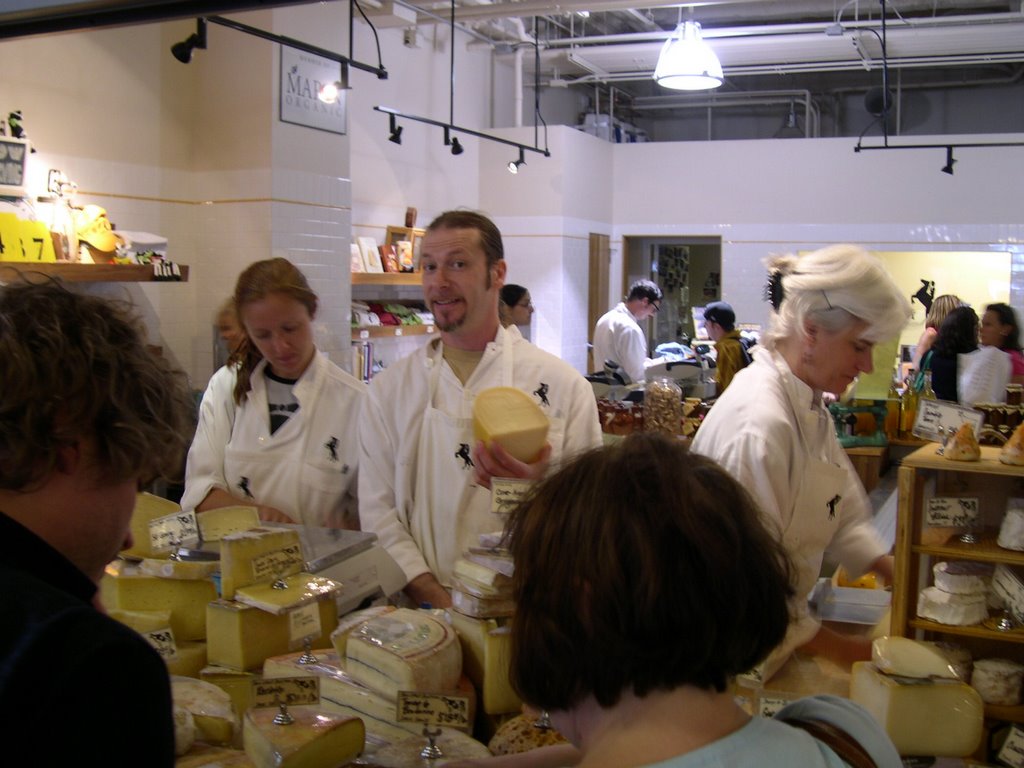
I've been putting in more hours at Cowgirl. It is another busy summer, full of visitors who want to see the sites and eat some fine cheese. The Ferry Building where Cowgirl is located has become quite the destination for folks visiting the city. It is in a prime location at the foot of Market Street, projecting into San Francisco Bay. Most of the building is supported by pylons, so the building is part of a large pier with water underneath it. Ferries still dock behind the building, taking people to Vallejo, Alameda, Oakland, Sausalito, as well as Larkspur.

We see plenty of ferry commuters as well as ferry employees, grabbing some cheese before they set sail across the bay. The rush usually begins around 4:30. Every day a few patrons will come up to the counter looking anxious. They will fidget and step from foot to foot waiting impatiently for their turn. When their number is called (Cowgirl has a take-a-number system,) patrons will ask us to please hurry because they only have five minutes before departure. We try to be quick, but it can be a challenge when the patron wants a bunch of cheese and doesn't know what they want. Fridays are full of commuters picking up cheese for parties on the ferries. The commuters become friends with others on the boats so they'll pick up some beer, wine, cheese and bread, take it on board the boats and have a party while dashing across the waves to Marin County. It is a great way to commute. I used to do it. But I never got to cozy with my fellow commuters. I usually took a nap.

I was working behind the counter last Thursday when Peggy Smith, one of the owners came dashing in. She was all smiles and happy to see me. "I didn't know you're back! I thought you were off somewhere making cheese," she declared.

"I am and I was," I replied. "Now I’m making an occasional guest appearance behind the counter." She was in the shop in order to do a special tasting with an esteemed visitor who was touring the Ferry Building. The new Secretary of the United Nations stopped by to try our cheese. He was accompanied by throngs of photographers, city officials and secret service security officials. It was quite exciting. Strobe lights from the newscameras made me feel like I was center stage at a movie premier. All business stopped while Ban Ki-Moon toured the place. He was very polite, trying our cheese and asking questions. Peggy explained a bit about what we do, where we make cheese and what we sell. The unsuspecting family that I was waiting on were blown away when I told them who was standing next to them. And in five minutes he was gone. Off to some other meeting, I suppose. It was almost as good as when Martha Stewart stopped by the shop.

Monday, July 09, 2007

In the Works

(The Cowgirls - Rachel, now working at the warehouse in Petaluma, Sue & Peggy--photo taken last August)

I do not like to be idle. To stay out of trouble I've been putting some time in at Cowgirl Creamery. It is always fun to step behind the counter again and sell a wide variety of fine cheese. I'm in my element. I get to talk about all kinds of cheese for hours! There are lots of new faces behind the counter, so I get to entertain them with many stories about my cheesemaking adventures. It is easy to sell something that you're passionate about. The customers seem to pick up on my enthusiasm and buy lots of cheese. I enjoy giving them fascinating tidbits about the cheese that they're tasting. For example, Everona Dairy's Piedmont, a sheep's milk cheese from Virginia is made by a medical doctor, Dr. Pat Elliot. I believe she's a cardiac surgeon. One ounce of a rich triple-cream like Mt. Tam has LESS calories than one ounce of parmigiano reggiano. Why? Because there is a lot more moisture (water) in a soft cheese like Mt. Tam, than a hard cheese like a parmigiano. Essentially, the harder the cheese, the more concentrated it is and the less water is in it. And goat's milk has less fat, naturally in it than cow or sheep's milk. I'm not saying that cheese is a low-fat or low calorie food. I just know what's going to make me fatter, faster.

I love talking to customers. Everyone is always happy when they enter the cheese shop. I can make them happier by offering a taste of anything they see. People become overwhelmed by the selection, so I enjoy helping them explore the possibilities. I just feed them until they find something they like. I engage them by asking questions like: "Do you like your cheese hard, soft or somewhere in between? Do you like it mild or bold? Creamy or pungent?" I try to zero in on something that they might enjoy. I can usually find something that they like and that they might not have tried before.

One customer particularly stands out from my stint behind the counter last week. A family was buying a bunch of cheese to pair with wines. They looked familiar. They've been in the shop before and were familiar with many of the cheeses Cowgirl sells. We were discussing what would pair well with a white wine (savignon blanc?) As we discussed our options, I was impressed with her cheese knowledge. She also really knew her wine. Turns out she and her husband publish a website called Fork & Bottle. I've looked at it before. They really enjoy their subjects, food & wine. They seem to have an emphasis on local foods from the Bay Area (they're in Santa Rosa) but their site is quite extensive and is a clearinghouse of food-centric information. I am intrigued by their cheese and wine parings that they're working on at the moment. I hope I was able to give Joanne some good cheese for her research!


(left: Trethowan's Gorwydd Caerphilly cheese)

I also like to see the regular customers who know what they like and look forward to getting their favorites. I'll try to point out certain cheeses that are truly stellar at the moment. For instance, last week I cut open a wheel of Gorwydd caerphilly, a Welsh cheese. It knocked my socks off. It was perfectly ripe and had a bright flavor that dances between lemons, asparagus, and thyme. Glorious. Sometimes it can be too ripe and sad. This one was just right. When someone asked me what was my favorite cheese I'd show them the caerphilly. My favorite cheese is whatever is at its peak on that particular day.

I've been missing my work at the dairy so I went out and bought a gallon of goat's milk at Trader Joe's. I made a batch of fresh chevre for our house and to share with Jim's uncle in McMinnville, OR. After it set up and drained for a day, I took some of the curd and made roasted red bell pepper chevre as well as fig and honey chevre. I kept a small amount and just salted it so I could have plain chevre for breakfast.

(right: freshly drained chevre ready to be salted and eaten.)

Cooking tip: I got a filet of salmon for dinner the other night. I cooked it on the stovetop so it got a nice, crisp skin and moist center. I then took a dallop of my roasted red bell pepper chevre and let it melt over the top of the hot salmon fillet as you would with herb butter. The results were a big hit at the dinner table. It really punched up the flavor of the fresh salmon and made everything sing. I've got to try that again. Working at Goat Lady Dairy made me realize how fun it can be to play with flavored fresh goat cheese.

Real Estate update: We found a great little farm between Carlton and McMinnville in Oregon. 13 acres with an Arts & Crafts bungalow, a barn, a few trees, and bare earth. We put an offer in it, haggled a bit with the seller, and now we're in escrow! My God! We're really doing this! Oh SH*T! We've got a lot of work to do, but we're going to make some our own cheese one of these days and were going to do it on Highway 47 in Oregon.

Saturday, January 20, 2007

Beyond organic

This just in:
Something to think about: How close are you to food producers?
How to farm without the stink. A guy in Florida is succeeding. Today's San Francisco Chronicle reprinted this article from the St. Petersburg Times.

If you're interested in someone in the Bay Area who thinks along the same lines, check out Knoll Farms outside of Brentwood.

There's a great audio slide show from Florida, too.

http://www.sptimes.com/2007/01/14/Floridian/It_s_his_nature.shtml

tampabay.com

It's his nature

Some say organic farming is the future. Dennis Stoltzfoos is already there - and one step beyond.

By DAN DEWITT
Published January 14, 2007


LIVE OAK -- Dennis Stoltzfoos once told another farmer he planned to spray his own pasture with molasses.

"He said, 'You don't want to do that. You'll have loads of grasshoppers.' I'm thinking: Grasshoppers! Yeah! That's more food for my chickens!" Stoltzfoos said, pumping his fist.

"We just think so differently here."

Call him a radical, even, because using blackstrap molasses as fertilizer and a feared pest as feed are just the beginning of his unusual ideas.

While most U.S. farms consume huge amounts of fossil fuels, Stoltzfoos, on one day in mid December, fired up an internal combustion engine only twice.

The U.S. Department of Agriculture views raw milk as an incubator of dangerous bacteria, and state ag officials once banned Stoltzfoos from selling it. Stoltzfoos fills his 2-year-old daughter's sippy cup with milk still warm from the udder.

He is so sure animal fats are the cornerstone of health that he worries the slight thinness of his eldest daughter's face is due to the candy his wife ate during pregnancy.

He fumes about the organic movement's alliance with soy-eating vegetarians. He has never bothered to pursue organic certification because he thinks it has become meaningless as regulated by the USDA or U.S.-duh, as he always pronounces it.

Stoltzfoos, 43, is tall, slim, hunched and balding, with a curtain of blond-gray hair hanging over the back of his neck. His baggy jeans and manure-splattered rubber moccasins suggest clothes are of little consequence to a man bent on saving the nation from its diet.

But fanatical as he seems, many his concerns are completely mainstream: E. coli outbreaks in bagged spinach and Taco Bell lettuce, high rates of childhood allergies and obesity, the destruction of farm land and culture. What's more, he says he knows how to fix all these problems.

"I think 20 years from now, we'll look back on conventional farming and see it as a flat-earth approach," he said. "I think this is the future of farming."

Taking the lead

Stoltzfoos, the youngest of 11 children in an Amish-Mennonite dairy family, left the farm at age 20. He worked part-time as an emergency medical technician, he said, but soon felt as if he was just rescuing the same heart attack victims over and over. In 1989 he moved from Pennsylvania to Tampa, where he set up practice as a natural diet consultant.

He became disillusioned with this job, too, he said, as he began to think of herbs and supplements as poor substitutes for nutritionally complete natural food. Convinced this was the path to true health, he and his wife, Alicia, bought the farm near Live Oak two years ago and embraced "beyond organics," which he describes as the growing rebellion against commercialized organic foods.

"He's a real pioneer. He's out there and he's leading the way for other farmers in the state," said Sarah Pope, a raw milk advocate from Lutz.

After a breakfast of eggs and milk on a warm morning last month, Stoltzfoos left the red-roofed house he shares with his wife and three daughters. Walking south with his helper, Steve Moreau, he came to his "eggmobile" - a galvanized steel chicken house on wheels attached to a lemon yellow Chevy truck splotched with primer gray.

Rolling forward about 100 feet, Moreau revealed the principles of grass-based agriculture pioneered by Joel Salatin, a Virginia farmer featured in Michael Pollan's acclaimed 2006 book, The Omnivore's Dilemma.

Every plant and animal is a tool, according to Salatin. By doing what they do naturally, they bolster the efficiency of the most important tool of all: the grass that works as a solar cell to convert sunlight to food energy. The farmer's job is to put the plants and animals together at the right time.

The rust-colored chickens climbed down from their roosts and into the fresh pasture, clucking as they found and devoured blades of green rye. In the patch of grass where they had spent the previous day, they left behind nitrogen-rich droppings.

Besides fertilizing the soil, his cows distribute seed in their manure. During the growing season, the cows stimulate grass production by grazing, which Stoltzfoos controls by moving cattle in and out of pens formed by portable, solar-powered electric fences.

On conventional farms, these jobs would be done by diesel-powered combines and chemicals manufactured with artificially generated heat and pressure.

Organic farming has eliminated man-made chemicals but otherwise plugged in to the same system, Stoltzfoos said.

The growing market for organics has attracted companies, such as Kraft Foods and General Mills, which ship their organic products as widely as their conventional ones. Large producers have lobbied for loopholes in organic standards to allow hens to be packed into vast chicken houses; organic dairy cows may be raised in feedlots, which have been linked to the most dangerous strains of E. coli.

Joan Shaffer, a USDA spokeswoman, acknowledged a "lack of specificity" in the rules but defended them as providing a uniform nationwide standard for consumers.

Stoltzfoos, of course, disagrees: "The idea of the U.S.-duh regulating organics is the most repulsive thing I've heard in years."

A pet peeve

The day's next job, milking the cows, starts with more walking.

Moreau, Stoltzfoos and his two eldest daughters, Caroline, 2 and Lily, 4, wandered through a grove of oaks to retrieve a herd of Jersey cattle and shoo them back to the milking barn, a corrugated metal lean-to jutting from a converted truck trailer.

The cows, lured by troughs full of natural mineral powder, formed a loose line behind milking stalls made of nailed-together 2 by 4s.

Anyone who has visited a conventional dairy would notice what was missing: the powerful smell of waste, the slurry of manure hosed from the floor of the milking parlor - and the remarkably large quantity of milk produced by one herd.

The 11 cows available for milking produced a total of 10 gallons, which Stoltzfoos poured into a white plastic bucket and then decanted into plastic jugs.

The yield is higher in the summer, when the cows eat grass rather than hay, and he plans to double the size of his herd. But also consider that he charges $12 per gallon, which is reasonable, he said, because his milk is the distilled essence of the natural world, a "white, liquid superfood." Along with selling eggs for $6 per dozen and poultry for $4 per pound, he grosses more than $8,000 per month.

"People will pay a lot of money for pet food," he said.

That is a standard, bitter joke with him. After the state Department of Agriculture shut him down for five months in 2005, he received a license to market his eggs, poultry and dairy products as pet food.

Selling raw milk for humans is illegal in Florida, and, according to many food scientists, dangerous and foolish. The fat-soluble vitamins in milk, A and D, stand up well to the heat of pasteurization and even ultra-pasteurization, when milk is heated briefly above the boiling point. Raw milk drinkers risk E. coli outbreaks, such as the one that swept through a natural foods co-op in Washington state in 2005.

Other scientists say there is no doubt milk from grass-fed cows is higher in vitamins and essential fatty acids and that pasteurization destroys some nutrients, including beneficial bacteria. Also, they say, raw milk from small farms is safer than milk from the filthy, urban dairies that created an outcry for pasteurization in the early 20th century.

But none of them actually recommend drinking it.

"If I were a dairy farmer, I would be very careful not to sell raw milk," said Ron Schmidt, professor of food science at the University of Florida. "The benefits do not outweigh the risks."

The costs of farming

The underground market of consumers who ignore these warnings is small but "rapidly, rapidly growing," said Sarah Pope, leader of the Tampa Bay chapter of the Weston A. Price Foundation, a raw milk advocacy group.

Founded in 1999, it now has more than 9,000 members nationally, Pope said, and the 350 local members purchase about 1,500 gallons per week from a secretive network of small dairy farmers.

When Stoltzfoos started raising cattle five years ago at a tiny dairy outside Dade City, supplying these buyers was easy because most of them lived nearby. Forced north by high land prices and neighbors hostile to his methods, he now relies mostly on one of his customers to distribute his products.

This customer drives to his farm from her home in Bradenton and stops to supply several co-ops on her return trip, consuming more gallons of gasoline than the amount of milk Stoltzfoos' herd produces in one day.

This causes Stoltzfoos to think, after lunch and before he heads back outside in the afternoon to move his broilers and beef cattle, how he could make his kind of farming efficient enough to feed 300-million Americans.

Prices must come down to attract a larger market. But consumers must also learn to pay more for naturally raised products - enough to lure more families into farming and to allow them to compete with developers to buy land closer to cities.

Some organic farmers also suggest redirecting the billions of dollars in federal subsidies away from industrial agriculture and back to family farms.

Not Stoltzfoos.

"Subsidies come with strings attached," he said.

"And the U.S. will not tell me what to do."

Dan DeWitt can be reached at dewitt@sptimes.com or (352) 754-6116.

Friday, January 12, 2007

Q&A time: So what's in that cheese, anyway?


It is time for another episode of "Ask Sarah." Today we look at cheesemaking from another angle.

I received the following email recently:

I am interested in learning how to make cheese, but the “kits” I have seen in my limited research all have additives I don’t want to use. Any advice on where to get recipes of how to make it like they did way back when, before additives? We have lots of farms around and I get my milk from a small Jersey operation.

You're lucky to be able to buy milk directly from a farm. And Jersey milk, too. Try making clotted cream. Jersey and Guernsey milk works best for clotted cream. Try the recipe on Dr. Fankhauser's website (see below) or try this one: http://drinc.ucdavis.edu/hman2.htm


A great place to get cheesemaking info is from www.cheesemaking.com , http://biology.clc.uc.edu/Fankhauser/Cheese/Cheese.html, and www.smalldairy.com . They all have good resource pages as well as recipes.

One of my favorite books is by Ricki Carroll, "Home Cheese Making." She runs The New England Cheesemaking Supply Company as well as the website cheesemaking.com. She's been doing it for years and is a great teacher. She even tells you how to make your own rennet.

I agree, I don't want to put additives or dyes in my cheese and I want to honor traditional ways of cheesemaking. The additives in the kits are not strange substances but usually include some form of acid like citric acid or tartaric acid. Citric acid is used as a substitute for lemon juice. The acidity in lemons can vary a lot, so using something with a consistant level of acidity can be easier when you're making cheese. You can make ricotta with either lemon juice or citric acid, or you can even use vinegar. It is the addition of acid that gets the milk to separate into curds and whey when making soft cheeses.

Most cheese is made by taking milk, heating it, culturing it, adding rennet, cutting the curds (if called for), draining the whey, pressing the curds if needed, and then aging the cheese in a humid environment.
Pasturized and homogenized milk has been cooked and beaten up in transit. It gets a bit of help by adding calcium choride in order for the curds to set properly.
Cultures and molds are selected strains of beneficial bacteria that produce and regulate acidity and give milk a nudge in the right direction for the style of cheese that you want to make. If you have access to raw milk and you want to find out what the flora is like, don't add the starter culture and just add rennet and see how it turns out. If you're lucky, it just might be something that tastes good.

That being said, if you want to make certain style of cheese, like a brie, you've got to innoculate your milk with P. candidum in order to get the fluffy, white mold to grow. The mold gives it the flavor of brie and helps the enzymes break down the curds and make it soft. Many European cheesemaker make their own cultures such as traditional cheddar makers in England. They've been using the same culture for generations. It is like sourdough bread starter. It is a critical part of the flavor of cheese and they take great care to keep their starter strain alive.
Don't be afraid to give cheesemaking a try. It is a slow process, but the results are so tasty and gratifying.


Thursday, January 04, 2007

Refreshing!


Time to take a break from cheese and look at my other love, my little garden.
Green space is a cherished thing here in the city. I love my tiny plot o' land in front of my house. A few years ago, I tore out everything in the yard and started over. The only thing that remained was a dwarf gravenstein apple tree in the center of the yard. With the tree as a focal point, the rest of the garden is landscaped in California native plants. It is full of plants like irises, bunch grasses, elderberry, toyon, white sage, artemesia (mugwort), ceanothus (Calif. wild lilac), Calif. fuchsia, flannelbush, wild currants, and even a wild grape vine. For the past year I've been bugging my friend Mike, my landscaper about a few spots in the garden that need work. Mike helped me build my vision. If I did it, the garden would never be done, nor would it have a working irrigation system, nor be gopher-proof (gopher baskets around the roots,) nor weed-resistant (fabric weed barrier). I turned up the volume of my whining in October. Autumn is when you want to put plants in the ground, so the winter rains can help them take root and keep everyone happy. We finally went plant shopping on Tuesday.

We spent big bucks at Yerba Buena Nursery, a nursery specializing in California native plants. It is located in a wooded canyon on the west side of Woodside, in the hills of San Mateo County. Woodside is home to some very wealthy citizens who made their fortune in Silicon Valley. If they don't live in Atherton or Hillsboro, they live in Woodside. Neil Young and Larry Ellison (Oracle software) live in Woodside. Interspersed with the billionares are a few hold-outs from the radical 60's. The second growth redwood that crowd the canyons on the Peninsula also attracted hippies and nature lovers. Some of them are still there. Yerba Buena Nursery is located on an old farmstead on a Western facing slope of a hill, over the ridge from the craziness of Silicon Valley. Founded in 1960 on what was once a cattle ranch, the family run business has been devoted to selling native plants ever since. Their demonstration gardens alone are worth a visit. The gardens are overrun with birds, inects, and cats looking for an easy meal. We had a cat follow us around the nursery until she spied a gopher under a shrub. A minute later, she was happily playing/torturing the squealing rodent. She eventually ate it. Yum! Rodent control at its finest.

We came, we saw, we bought some plants. A lot of plants. I now have two magnificent manzanitas to go in the garden. Along with bush lupine, redwood sorrel, ferns, clamatis, achillea millefolium (pink yarrow), buckwheat, dudleya, and a myriad of countless beauties with long latin names that I've got to try to remember someday. Lot of plants to flower throughout the year and provide seeds and berries, too. I might need to add a few more plants, but I can fill in later. I want to get these things placed in the garden and then see what else I might need. I think I might want one more manzanita. I like the Louis Edmunds variety.

There will be light in the garden, as well as better drip irrigation. The path around the apple tree is being redone, too. A few hummingbirds have been giving Mike and his crew a suspicious eye because he's messing with their garden and their lavatera which is still blooming (it never quits). The lavatera (tree mallow) has been pruned way back, so now we can walk on the path again. The ceanothus is beginning to bloom right now, but they don't need to be touched. That will keep all of the neigborhood honeybees and bumblebees happy. I love the fact that my garden is providing a healthy habitat for local wildlife. This tiny patch of growth in the Sunset District is still teaming with life, and I've seen lots more, since I put in a garden full of native plants.

Tuesday, December 26, 2006

Highs and Lows


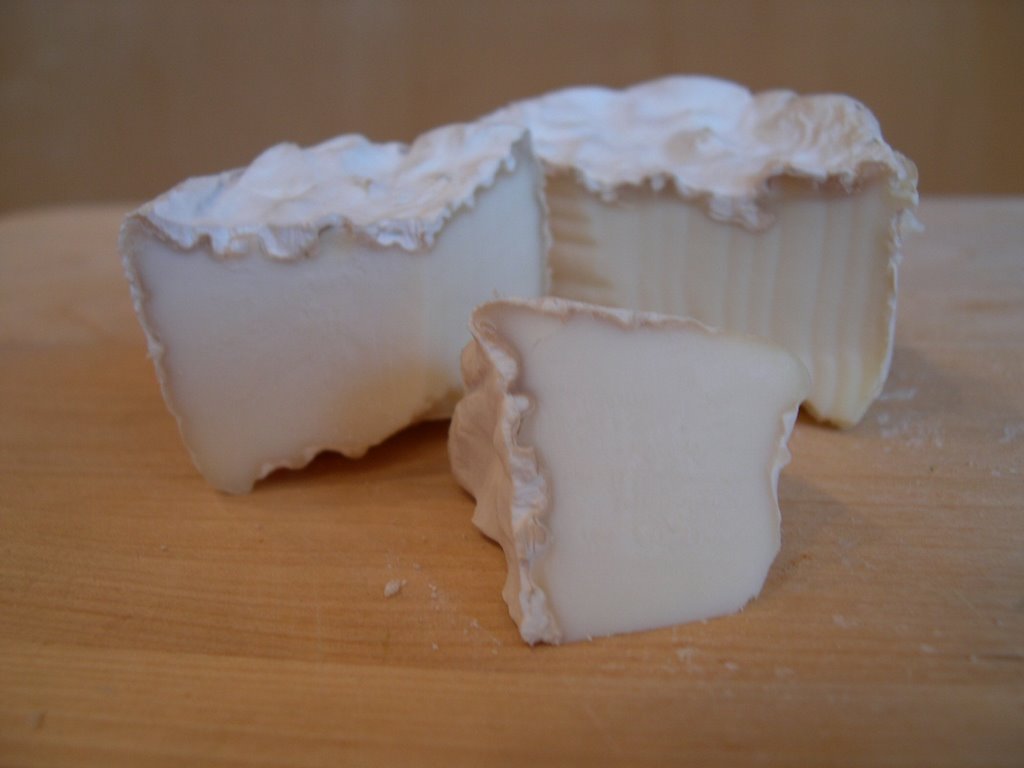
Well, not all things turn out right. I made a semi soft, bloomy rinded goat cheese to give away at for the holidays. I was happy early on, but when I tasted it last week, something was amiss. It had a faint taste of bleach. Chlorine and cheese do not mix. Damn! They looked good. Perfect little hockey pucks of cheese. Soft, velvety coats encasing snowy white cheese. Too bad they are so unappetizing. A big waste. I hate throwing out cheese. Into the trash with it.

I was not going to be stopped. Three days before Christmas I ventured out into the crowded parking lots of suburban San Francisco and went to Trader Joes. I needed more goat milk. If I couldn't give anyone an aged cheese, I'll give 'em something fresh. I also stocked up on other essentials like cereal and uncured bacon.

After a harrowing time at the grocery store, I managed to get home safely. I cleaned the counters and my stockpot. I dumped the goat milk into the pot, heated it, added my starter and let it sit for 18 hours.
The next day I gently ladled the firm curd into clean cheese cloth and set it over the prep sink to drain for another day. I like my fresh chevre to be creamy, yet dry. I actually let it hang for a day and a half.
The next evening, I plopped the beautiful blob of fresh cheese into my Kitchen Aid mixer, started it on low and added some salt. Not too much, but enough to enhance the flavor and give me the creamy texture I was looking for.
Perfect.
I grabbed an ice cream scoop and dished some up into four containers. I was sharing it for Christmas with Jim's family, my mom, and my sister. I got to keep a small amount.
It turned out well.
Now I've got to clean out the cheese cave in the garage and make sure it doen't smell like chorine. No more bleach flavored cheese for me.

Happy New Year.

Wednesday, December 13, 2006

Deeper and nearer


Photo of curds from my caerphilly cheese. Yes, I washed my hands.

I have not been neglecting my dreams. I have been taking classes on how to start my own business at the Small Business Association and with their affiliate, SCORE. Very helpful and productive use of our tax dollars. I have all kinds of information that I need to research in order to write a solid business plan. My work is cut out for me. I like having a plan, though. It is nice to have a good map in order to move forward and not get lost.

I also feel that I have a bit more to learn before I'm comfortable making my own commercial endevor. I want to make some hard cheeses on a larger scale than in my own kitchen. More tools for my toolbox. Recently I saw a posting on one of my online discussion groups. A goat dairy in North Carolina is looking for interns to work on their farm for 3 months and work in all aspects of the cheesemaking business. This posting looked too good to be true! I'd get to learn about production from udder to market. It took me a few days to ponder the implications, but finally Jim and I decided that this was a good opportunity for me. I see it as graduate school. What do I have to lose? I emailed 'em my resume and a cover letter and got a reply with in a couple of hours. They said, "Wow!" They like me. I talked to the cheesemaker for 45 minutes on Sunday. This looks like a good thing for everyone. I'm not comitted to doing anything this spring, so I could make this intership work. I couldn't design a better graduate program.

Sure, I'm nervous. It is three months away from home, three thousand miles away from home, and three counties away from where my mother grew up. It is also time that I could be searching for our new home and business. I'd be working all Spring. There are pros and cons in every major decision.

I could just bite the bullet and get going, learning as I go. I'll do that anyway, I just want to get a few more tricks up my sleeve and I learn best from working with others in a group setting. Gaining the knowledge in isolation is never fun.

Climax, North Carolina, here I come.

Let it ride.


Sometimes, if you just leave something alone, it will turn out in your favor.

This is the cheese that I made in late September, a week after I got home from Ticklemore. It is about 10 weeks old. The taste has really changed and opened up. The texture is better than I could have hoped for. As it matured, it has developed a very delicate, light mushroomy flavor, slightly earthy. Not goaty at all. It is amazing what you can do with milk from Trader Joes.

I took it into Cowgirl last week to see what my co-workers thought. Everyone like it! I got some good feedback and I hope to replicate this cheese again. Woo hoo!

Thursday, November 30, 2006

Yippee kai yai yo!


In case you might be wondering, I still work the counter at Cowgirl when I'm needed. This seems to work well for everyone. For me, I can have Saturdays free to spend with my sweetie. For Cowgirl, they have someone they can call upon when they need an extra set of hands and don't need to worry. I worked last Saturday, selling cheese to lots of tourists visiting San Francisco for Thanksgiving. I enjoy the public interaction. If someone wants to try a cheese, I'm happy to let 'em have a taste, and if I haven't tried it in a while, I'll take a taste, too! It is fun to compare tastes with my customers. Usually we both wind up saying "Yum!" and I'll go and cut a wedge of cheese for them on the old Handee cheese cutter.

Lately I've been tasting a lot of cheese. It is like saying hello to old friends. I'll take a tiny taste and the memory of the cheese comes rushing back. Since cheese tastes different from wheel to wheel, I'll have a good idea how this particular cheese adds up. Lately the Midnight Moon (goat milk gouda) has been delightful. It is extra-aged and extra tasty. The Comté Montagne has been off the scale in terms of its flavor. The Abbaye de Belloc has been really rich and nutty, too. Red Hawk has been particularly fragrant and soft. Other favorites lately: Hillman Farm's Harvest Goat, Vermont Shepherd, and French Raclette.

Life is good so long as I can keep working with cheese.

Monday, October 23, 2006

Fin de Semana de Queso

A glimpse of Cowgirl on a Saturday in August. Stephanie, Daniel, and Janet working the crowd. Janet has moved to DC to work at the new shop on F Street. Stephanie wears many hats. Check out her blog The Grub Report.

I had a very cheese-filled weekend. I spent Saturday morning working from 8:00am -2:30pm working at Cowgirl Creamery. I called it a guest appearance. Several of my fellow cheesemongers asked if I was coming back for good. I love cheese. I love selling cheese. The customer interaction is really gratifying. I feel like the cheese fairy, spreading happy cheese blessings where ever I go. Offering tastes of creamy goodness to people who are eager to try something new. I like to share my passion. Returning to the cheese counter is fun for me also, because there are new cheeses! Yet, I get the most pleasure out of making cheese.

There is a new Cowgirl Cheese called Inverness. It is a "lactic" cheese and a work in progress. It has a bloomy rind like Mt. Tam, but it has a lighter texture. It is shaped like a large, white thimble. The taste is slightly tart, and dissolves on the tongue with a creamy finish. This is a style of cheese that I'm still trying to figure out. Lactic cheese is a type of fresh cheese but it is also used as a descriptive term. Starter culture and a little bit of rennet is added to warm milk and left to sit for several hours (usually overnight). The milk turns into a thick yogurt consistancy. This curd is not cut but poured into a colander lined with cheesecloth. The four corners of the cheesecloth are tied together and the curds are left to drain for several hours. Since the curds are not cut, less whey is expressed and the cheese is very soft and spreadable. It is used like cream cheese or fromage blanc. Cowgirl's is left to age until a bloomy rind has grown. P. candidum must be added to the milk or sprayed on to the young cheese and left to age for a couple of weeks. I'm just guessing. I haven't been to the creamery to ask.

But I digress. Other new cheese: Two from Vermont Butter and Cheese company, soft spreadable goat cheeses with funky rinds. They come in cute little wooden trays. Jasper Hill Farm in Vermont has a new blue cheese, similar to a stilton. Fun! There is a fresh sheep's milk cheese from Wisconsin in the fresh case. Similar in texture to a fresh chevre, but it is more mild and has a rich, slightly sheepy(?) finish. I like it.

Also new to Cowgirl, more cheese from Vermont: Willow Hill Farm. They are an organic sheep dairy, who also sell fresh lamb, wool, blueberries, blankets in addition to sheep's milk cheese and yogurt. Cowgirl is carrying Vermont Brebis and Alderbrook and their yogurt. Both cheeses are cave aged, bloomy rinded and very runny. I have a Brebis that I need to try. It looks like a small camembert and feels very soft.
I can't wait to try it this afternoon. I think I'll get a loaf of french bread and a spoon. It is quite ripe.

By the way, Jim has put me on notice. No more cheese can enter the house until we finish what we have. I've been on a spending spree it seems. I can't go into a market without examining the cheese section thoroughly. I call it research. Jim calls it overkill. "Enough, dear. No more cheese for the rest of the month," he said last week. "But, but....O.K. I guess the fresh goat cheese log from Spain, the wedge of Basque sheep/goat tomme, Parmiggiano Reggiano, cave aged gruyere, my own Faux Ticklemore - now called Sarahmore (thanks Cynthia!) and my own fresh chevre are enough. I'm not counting the overripe little morsels of soft, French sheep's milk cheese, nor the tiny reminants of Harbourne that are still floating around in the veggie drawer. The promise went by the wayside after Saturday's stint at the shop. I had to try that Vermont Brebis. I've also got some Straus yogurt in my fridge as well as Bellwether Farms Creme Fraiche. There are two gallons of Clover milk waiting to be turned into cheese. I do my best to support the dairy industry. If you follow the Clover link, look at the billboards on Clover's website and check out 1989. A few of my favorites are there, especially #3.

Sunday we drove down the San Mateo coast to Half Moon Bay. It is pumpkin season. Jim and I love roaming around pumpkin patches to find the "right" squash to turn into jack-o-lanterns. The more misshapen the better. We've had good luck at Bob's Pumpkin Patch in the past. The have acres of them and you can even pull them off of the vine. This year produced some good ones. We've found a huge, pear shaped squash that's still kinda green. We yanked it off the vine and put it into the wheelbarrow. Soon five more orange pumpkins were added to the wheelbarrow. We're ready for Halloween now! It was around 2:30, too early to head home, so we drove 20 minutes south to Pescadero to grab some soup and olallieberry pie at Duarte's (pron. Doo'-arts) a tavern that specializes in cream of artichoke soup, fresh seafood and pie. Their cream of chile soup is amazing, too.

Since we were in Pescadero, and I wasn't that hungry yet, I suggested we drive over to Harley Farms, a farmstead goat cheese maker. It is on the edge of town (three blocks from "downtown") in Pescadero. We drove up to the the farm and they were open. Yay! The goats were casually walking around the pasture and checking out the tourists near the gate. We went into the barn which is Harley Farms' shop and make room. Next door is the milking parlor. There are large windows to allow for plenty of light and lets folks watch the exciting work of milking goats or making fresh goat cheese.

Inside the shop, Dee Harley was selling her cheese and swatting flies. A big, grey cat was dozing in a patch of sun on the floor. We entered the small storefront and sampled Dee's assorted cheeses that lined the counters. They were hidden under cheesecloth to protect them from flies and the sun. We sampled her chive logs, goat ricotta, fromage blanc, and other delicious goat cheeses. Locals came in and grabbed their weekly supply of fresh cheese, paid and left. We bought a tub of fromage blanc and chatted with Dee. She's going to the Slow Food Terra Madre gathering in Turino, Italy this week. The Slow Food gathering is getting to be quite the shindig. Cheesemakers (and others) from England, the USA, and I'm sure most of Europe decend on Italy to meet and talk about sustainable food production and issues like EU and FDA regulations that kill traditional methods of food preparation. A lot of eating happens. I have seen photos of multitude of cheeses to try. I'd like to go someday, but I'd like to have something to show for myself. Slow Food's Terra Madre is to the food scene as South By Southwest is to the music world. Everybody shows up and people enjoy themselves. 600 international cheeses vs. 600 international bands. Dee was excited to be going and representing American cheesemakers (even though she's English).

We talk to Dee for a while. I told her that I've been making cheese at home and abroad. She was very supportive and gave us lots of advice. We really hit it off with her. She invited us to go and say hello to her 200 goats. How could I resist? We walked through the gate and were greeted by some very friendly Alpine does. The stinky billy goat was walking around making sure his girls were happy. We scratched ears and talked to the girls. It was a nice way to spend an hour. Dee invited us back in the spring when the kids are around and the milk is at its finest.
We'll be back!

Wednesday, August 16, 2006

Cheddar is a verb


Back to cheese talk.

Most folks don't think about the history behind that block of shrink-wrapped, orange cheese they just brought home from the supermarket. Cheddar originated in Somerset County in England's West Country. There is a town called Cheddar which is close to the Cheddar Gorge and the Cheddar Caves (not much cheese is made in cheddar anymore but there is a touristy museum in the caves.) When you make cheddar, you must cheddar your curds. This is a process of stacking up your curds into loaves and letting the heat that they generate aid in the whey expulsion and acid production. Every ten minutes or so, you flip your curd loaves and let the top part cool and redistribute the moisture. The curds are knitting themselves into a texture like cooked chicken breast. After you cheddar your curds, you must mill them.

A couple of weeks ago, I was slinging the cheese back at La Lecheria de las Vaqueras and what should I spy, but a lone piece of my favorite cheddar on the planet. We had Westcombe Cheddar! Hallelujah! After I wiped my silly grin off of my face I had to ask everyone behind the counter if they had sampled this little beauty. It is one of the BIG THREE traditional farmhouse Somerset cheddars. The others are Keen's and Montgomery's cheddar. Each cheddar has its unique signature flavor, and is as individual as my three cats' personalities. All three are aged at least 18 months before we see them over here. I love Westcombe because it's has a slightly dry, crumbly texture and sweet toffee notes, even hints of butter brickle, yet it's still savory and warm on the tongue. I brought a sliver home and shared it with Jim. He was as thrilled as I was to see it. Together, we broke off a piece to taste. He took a sniff. Then he popped it into his mouth. "Oh my God!" he crooned. "It smells and tastes just like their aging room! I'm transported right there, to that huge room again!" It's true. You could totally smell that moldy, humid, cavernous warehouse in Somerset. This is a good thing.


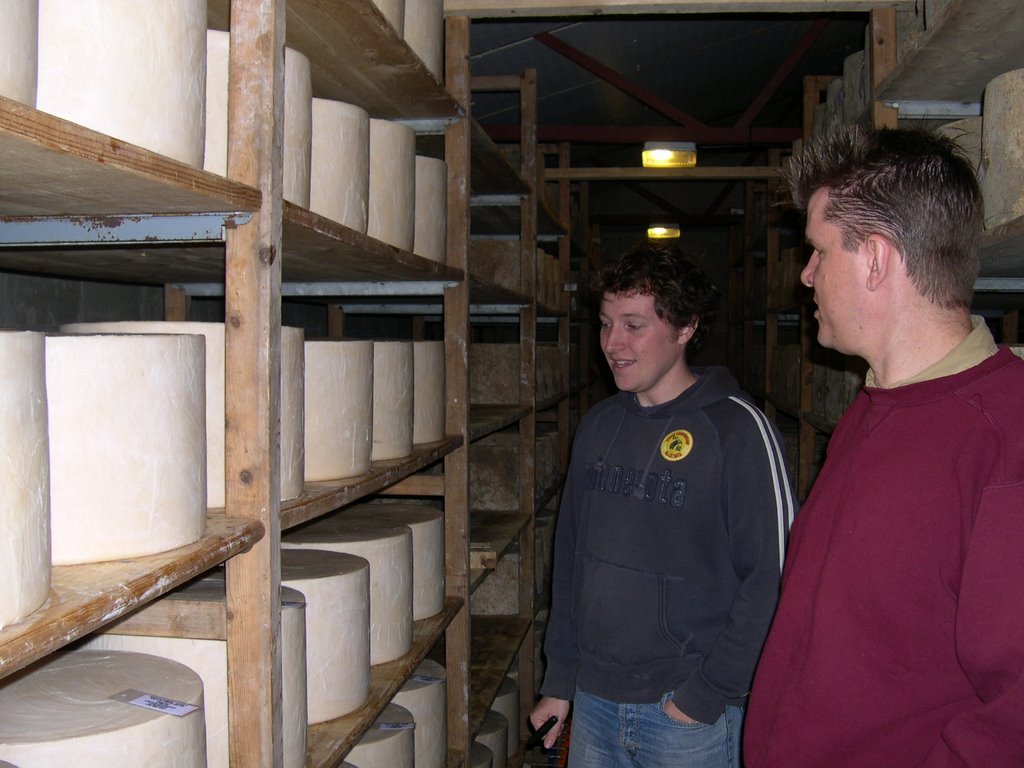
Jim and I visited Westcombe in May. Tom Calver spent half a day with us, showing us their facilities and the family farm. His dad runs the dairy while Tom takes care of the marketing end of the business. Tom was a superb host. We watched Bob, their cheesemaker preparing to make another batch of cheddar. Tom explained how they incubate a mother culture overnight to get a better starter for their cheese. This culture looks like yogurt when its ready to go. According to Tom, they even eat it like yogurt occasionally. He brought us into their aging room which is a three story bunker filled with thousands of wheels of cheddar and Westcombe Red, a raw milk red Leicester. The smell was of earth, mold, and cheese. Tasting that bite of Westcombe brought us right back to this room. The care and nurturing that these cheeses go through really impressed me. It begins with the cows. Tom wanted to show us something. We piled into his Mitsubishi SUV and drove up to the summit of a high hill. We got out of the car and were swept away by both the blustery wind and the panoramic view that encompassed miles of southern Somerset. In the distance was the Glastonbury tor, farms, small clusters of houses, the village of Evercreech, and his family's own farmhouse. But he wasn't just showing us the very impressive view. It was what we were standing in. All around us was knee high rye grass being tossed by the wind. Tom bent down and plucked a stalk. He told us that it's at its peak in nutrients and energy right now and is ready to harvest but they can't in because it has been too wet. It's true, it was raining a lot. This energy packed rye grass as well as the grass from the pastures helps the cows produce high quality milk. This in turn makes a damn, fine cheese. The care the cheese gets in the aging room, just seals the deal. I knew I liked their cheese, but after a day with Tom and his family, I LOVED their cheese. It's a reflection of their care and concern to make the best cheese that they can produce.

Tuesday, August 15, 2006

Sebastopol then and now


It's August and I've got a gravenstein apple tree in my garden ready to offer up it's tasty burden. It's an early apple, slightly tart and sweet, crisp and juicy. It makes heavenly applesauce, superb apple cakes, amazing apple pies, and yet it's still a beautiful eating apple. When we were looking at houses, the apple tree was loaded down with fruit, even though it had obviously been neglected. This gravenstein tree was a major selling point in my mind. For the past decade, I can't find these apples at the grocery store. Unfortunately, the gravenstein apple orchards in Sonoma County, particularly in Sebastopol are rapidly vanishing. They are being ripped out and replaced with either vineyards or houses or both. What is a farmer supposed to do when the land that they've always cultivated is now worth millions of dollars per acre and they are only getting $0.20 per pound for an apple harvest that lasts for a couple of weeks? Wine grapes make money, apples don't. The land itself can give a quick, one-time payoff and the landowner can retire in style so long as they don't want to live in the Bay Area anymore. I can't blame the landowners for not keeping the trees, but I sure miss seeing our local harvest at my local grocery store. (Stepping off of my soapbox now.)

There's always been a soft spot in my heart for the area around Sebastopol in Sonoma County. We spent many Sunday drives tracking down seasonal fruits and vegetables. If we found a local treat, we'd usually buy some to take home. Honey, eggs, beef jerky, zucchini bread, parakeets, etc. This is Mr. King, as I mentioned in my first post, he's the extraordinary man who could grow anything in the fruitful soil on Ross Station Road in Sebastopol He's holding some of his tasty red potatoes. He's long gone now, but I hope his fruit trees have survived.

Monday, August 14, 2006

I brake for Watermelon Trucks


Warning! No cheese content, but plenty of other food references!

My dad was a fan of the road trip. Why fly when you can drive, even when your destination is 1000 miles away? Gas was cheap and The Toad had a big gas tank. We could go for miles without stopping. And he would. We’d drive from the Bay Area to Hamilton, Montana (near Missoula) to visit family friends. We’d drive to Crater Lake, Klamath Falls, Glacier National Park, Beowowie, Nevada, Walla Walla, Washington. I learned my Western US geography staring out the window of the ’69 GMC Jimmy. Dad thought air conditioning was a waste of money and the car only had AM radio. So I spent hours surveying the horizon, watching the landscape change. Hunger would eventually force us to stop, so Dad would find a place that offered fine hospitality, usually close to the railroad tracks. Somehow I always made a mental note of where we ate, and years later, I can still find those pit stops.

One of my sisters went to college at Whitman in Walla Walla, Washington. Dad and I would drive up to visit Shelby and we’d stop at plenty of greasy spoons, a beanery, a truck stop, and a few farm stands if we were lucky. Warren loved trains, and his attraction lead him to many "beaneries" near stations where the crews would dine. One such spot was along the Columbia River gorge. It was in a town called Wishram, Washington. It’s across the river and east from The Dalles, Oregon, near the confluence of the Dechutes River and the Columbia. This was one of the last company owned beaneries operated by the Burlington Railroad. It offered lots of food at reasonable prices, both good selling points for my dad and other railfans. As a kid, I remember driving along the bluffs of the Columbia River and then dropping down a very steep grade into Wishram. It was a small cluster of buildings huddled up against the base of the bluffs at a bend in the river. The train tracks skirting along the edge of the town as if claiming the bank of the river as it's own. There is a railroad bridge just west of town. Something about this stretch of river has made it a transit point and gathering place over the centuries. The local Chinook tribe used to trade salmon at this spot. Lewis and Clark camped here when you could look out over the Celilo rapids and Celilo waterfalls. The John Day Dam flooded the area so now it is more like a lake. Another local landmark is Washington’s Stonehenge. It’s a full scale reproduction of the original in England. This Stonehenge is a war memorial made of cement instead an ancient ceremonial site made of stone. A trip to Wishram and Stonehenge added a bit of "culture" to our drive to Walla Walla to see Shelby.

One summer, we decided to drive east from Walla Walla and visit my parents' friends in Hamilton, Montana. It was a beautiful drive across Southeastern Washington, central Idaho and along the Bitteroot Mountains in Montana. Eventually we wound up at Flathead Lake to visit a railroad photographer named Ron Nixon.

After a few days hanging out with my sister, we headed east on a scenic country highway. The scenery changed from wide open wheat fields to vast evergreen forests, narrow valleys, rushing rivers, and huge mountains. We crossed the Snake River several times. The weather was cloudy and it looked like it was about to rain. You could smell the dampness in the air. Around Lewiston, Idaho (across the river from Clarkston, Washington) we saw a pickup truck pulled off by the side of the two-lane highway. Sitting next to the truck was a man wearing a cowboy hat. The truck was loaded down with watermelons. Big, Texas stripers. It was just starting to spit. "Dad, can we stop and get a watermelon?" I asked. I could see Dad wasn’t ready for an unscheduled stop. "No," he said. "Let’s stop at the next one." We drove past the old pick-up truck. I watched the truck shrink in the distance as we sped down the road. It began to rain a bit harder. I sat there, in the passenger seat keeping my eyes peeled for another watermelon truck. All I saw were trees and raindrops. No farm stands, no trucks, no options. We kept driving. After two hours of nothing, it finally dawned on me that there would be no watermelon for us today. Certainly not from the back of truck. We made it to Hamilton, but I would never forget the fact that Dad missed the last watermelon truck. To this day, I always have pause when I see a guy selling cherries, corn, or even watermelon from the back of his truck because there might not be another one down the road.


Monday, August 07, 2006

American Cheese Society Conference, Portland, OR


American Cheese Society Conference was a real eye-opening experience for me. I knew that the cheese world was populated by some nice folks. I've met some great people in the shop. I've visited a few cheesemakers and I have yet to meet anyone that's been unkind. There are more than a few "unique" individual, but like attracts like, y'know? At the conference, I observed a bunch of folks sharing ideas, building friendships, and trading experiences. It was a wonderful thing to see. There's a strong sense of community that is very supportive of each other, and I found it easy to meet folks that I wanted to meet. Like Mike Gingrich, of Uplands Cheese Company in Wisconsin, the maker of Pleasant Ridge Reserve. Sid Cook, owner of Carr Valley Creamery also from Wisconsin was great. David Gremmels and Cary Bryant were very warm and supportive to an eager, novice cheesemaker like me. I had a blast listening to Ig Vella, the owner of the Vella Cheese Company in Sonoma. His personal history is interwoven with California history and I just had to ask him a couple of questions to get him going. He's got a great family history, that reaches back several generations. Keep in mind he's in his 80's. I was entertained for an hour listening to his stories about going out with his dad, an Italian immigrant, and acting as occasional translator at the produce warehouses around San Francisco. His dad also sold their Dry Jack cheese as a substitute for Parmigiano Reggiano when it was unavailable during WW1 and WW2. They actually developed the Dry Jack in order to fulfill the demand for a hard grating cheese. Ig talked about how his grandmother(?) was the head cook for General Vallejo at his home in Sonoma. When Ig was a kid, there was a debate raging at a family gathering about what was General Vallejo's favorite meal. "Go ask Grandma!" someone said. Grandma wasn't there, but they called her up and asked her. (She lived to be 98.) Well, she settle the score with one word: ravioli! Apparently General Vallejo loved her ravioli. Being a local history buff, I ate this stuff up.


The Festival of Cheese was the grand finale of the conference. It was held in the grand ballroom at the Portland Hilton. Imagine a huge cavernous room filled wall to wall with tables of cheese. There were 941 cheeses on display. Everyone who entered the competition had cheese for sampling. I volunteered to do prep that morning. Aged sheep and fresh cheeses were on my table. Team of three tackled the immense task of setting up appealing displays of all of the cheese from the countless categories. There was a mountain of cheddar along the back wall. The conference had hired cheese carvers to sculpt birds and images on blocks of cheddar. There were seventeen tables set up with all of these cheeses. It was impressive. I got a pretty sore forearm from all of the cheeses that I cut up into bite-size bits. We began at 7am and preparations lasted until 3pm. At 5pm, the doors opened to the public.

My pick of the 941 cheeses? Aged Raclette by Leelanau Cheese Company of Michigan. It is rich, dense, chewy, with hints of smoky toffee flavors. I'd eat it all day long if I could. Sorry, you can't get it anywhere except at the creamery and winery. Ugh! Ann and John Hoyt are making some mighty fine Raclette up there in Michigan. They trained in Switzerland for four years and now produce their cheese at a farm that also has a winery and inn. Hmm. Perhaps I need to visit Michigan....

Thursday, July 27, 2006

It's a cheesy world


DSCN2018
Originally uploaded by sairbair.
What a delectable sight! This is the Fine Cheese Company in Bath, England. My feet seem to have a knack for taking me where I need to be. Found some wonderful local cheeses here. The staff are quite knowledgeable and friendly. Like any good cheese shop, you are encouraged to taste before you buy! The cheese wall is chilled, and the cheeses are not touched by plastic wrap a.k.a. cling film. Plastic can impart a nasty taste to cheese, so finding cheese on display "au natural" is a treat.

Damn, I love my work.

Wednesday, March 01, 2006

the cheese tome


Who knew that cheese could be so exciting? I look at a freshly cut wheel of Westcombe Red and I break out into a huge smile. This cheese used to taste like plastic. Now it has a nice fruity finish with a pleasant edge. Wow. This is why I like cheese. This is how I know I'm in the right place. I get so excited about a freshly cut wheel that I must share it with my customers. Why not? My job it to tell 'em what's great and why. I'll try a sliver of Pleasant Ridge Reserve and do a happy dance. I can taste the love and devotion that went into the making of this cheese. It reflects it. The care that the cows receive, the quality of the grass they eat, the gentle ladling of the curds into the molds. Every step matters, from beginning to end. Mariano Gonzalez, the award winning cheesemaker at Fiscalini Cheese Company said that when he tastes his cheese, he can tell if he was in a good mood that day.

Update: July 27, 2006. Fiscalini's Bandaged-Wrapped Cheddar took a couple of blue ribbons at the American Cheese Society Conference last week. A really savory, traditional English style. farmstead cheddar. The texture (paste) is on the dry, crumbly side, and like a good cheddar, it's been rubbed with lard and bound in cloth to help it age properly.

Friday, February 17, 2006

Forever cheese


Why cheese?
Why not cheese? -- is a better question. I have been in love with food since I was in diapers. When I was a kid, Sundays were set aside for The Ride. My family would pile onto the bench seats Dad's big, green GMC Jimmy (called The Toad) and we'd drive. We didn't always have a specific destination, but it usually involved picking up fresh produce from farms within a 100 mile radius of our house. Since I grew up in Northern California, that meant we had pretty good farms to fill our larder. We didn't have terms like "seasonality" or "sustainable agriculture." Organic didn't exist -- though "natural" foods were usually nasty, heavy, pasty things that came from the health food store.

During cherry season, we drive to Suisun (pron: soo-soon') and visit the orchards up and down Suisun Valley Road. We'd usually stop at a "U-Pick" cherry orchard where the farmer would hand us a kidney shaped bucket on a rope to suspend around our necks. We'd climb the tall ladders and fill our buckets and our bellies. After an hour of picking, the heat of the sun in late May would get to us and we'd wander back to the wooden shed to weigh our harvest. The farmer would box the cherries and we'd take them away with sticky hands and stained chins. There was a lone winery amongst the orchards where we'd stop and buy a jug of red wine vinegar. This was fancy stuff, and Mom would only break it out on special occasions.
Every May we'd find few and fewer cherry orchards. It was my first experience with the plight of the family farmer. The farmers were getting old and the kids didn't want to continue to farm. The suburbs were rapidly growing and the land was more valuable as subdivisions. Vineyards began to replace orchards. The farms were disappearing before our eyes. We quit going to Suisun for cherries. A few years later we discovered Brentwood's cherry orchards.

Sonoma County was another great destination for fresh produce. The Harvest Trails map was our Bible. We'd drive to Sebastopol and pick Gravenstein apples in August. Mom would make apple cake, apple pie, applesauce, and apple crisp. We had a couple of farms off of Ross Station Road that were particular favorites. One farmer, Mr. King was a great storyteller. He'd worked all over the country, and finally settled in Sonoma County. He liked to play with fruit trees, coming up with new hybrids of white peaches and nectarines. He'd graft his own varieties that were probably the best peaches I'll ever eat. The white peach was so juicy and perfume-y that you could barely touch it without the skin splitting and juice would run down your arm. The first bite would explode in your mouth. The juice and flesh would mingle on your tongue, as you continued to slurp at the peach in your hand. It was sweet, and slightly tart, with a fragrance of blossoms and delicate sunshine. They were simply the best peaches in the world, and Mr. King couldn't remember the exact trees he grafted together. When he'd call us to tell us they were ready, we'd drop everything and rush up to his farm. He also grew potatoes, chard, lettuce and a wide variety of veggies. According to Mr. King the milk from freshly harvested lettuce will put a goose to sleep. How he knew that, I'll never know. Nor, how do you get a goose to drink the oozing white milk from the fresh-cut stem on the head of lettuce?

Cheese was something else we'd pull over for. The Marin French Cheese Company was a great place to go and have a picnic and be chased by angry geese. (I wish I had the fresh-cut lettuce close at hand.) I remember visiting the cheese factory and being overwhelmed by the stench. Damn! It smelled! And the trips to Sonoma were fun because we'd pick up a wedge of Sonoma Jack or Jack from the Vella Cheese Company. I loved those trips.
But when Grandma was coming to dinner, we'd pull out the special cheese: Teleme. This cheese is getting harder and harder to find these days. Teleme is a soft cheese, similar to Italian straccino. It's pale, white, creamy, like a very soft Jack, but with a bit more depth of flavor. It is dusted with rice flour and gets very gooey as it ages. As a kid, this was the fanciest cheese I knew. It is still quite popular and I'm saddened that most stores no longer carry it. Teleme should be declared the state cheese of California.

Update: I guess I should amend this. Teleme was being produced in Maine. Franklin Peluso moved from Los Banos, California to the cheese-friendly Rockport, Maine. He shared the facilities of the Mid-Coast Cheese Company. What does this mean to those of us that share a fondness for this silky, creamy treat? It's still being made and is still hard to find! Pester your local cheese shop and encourage your friends to eat more cheese.

Update to the Update 2007: Franklin Peluso has moved back to California. Guess the winter in Maine got to him. His cheese is now being produced at the cheese plant at Cal Poly. Look for Franklin's Teleme at your better cheese counters and at Whole Foods. Cowgirl does not carry it, usually. Janet Fletcher wrote about the move for the San Francisco Chronicle.